Quayside
Three AI modules for wholesale distributors, usable one at a time: a chatbot that answers from your documents and cites every claim, an agent whose purchase orders wait for a person, and an email-to-order API that sends low-confidence lines to review.
- Timeline
- Completed
- Role
- Full Stack and AI Engineer
- Team
- 1 person
- Chat eval 0.98 (49/50)
- Automate eval 47/47
- Agent eval no passing run yet
- Tests 103 + 6 e2e
Overview
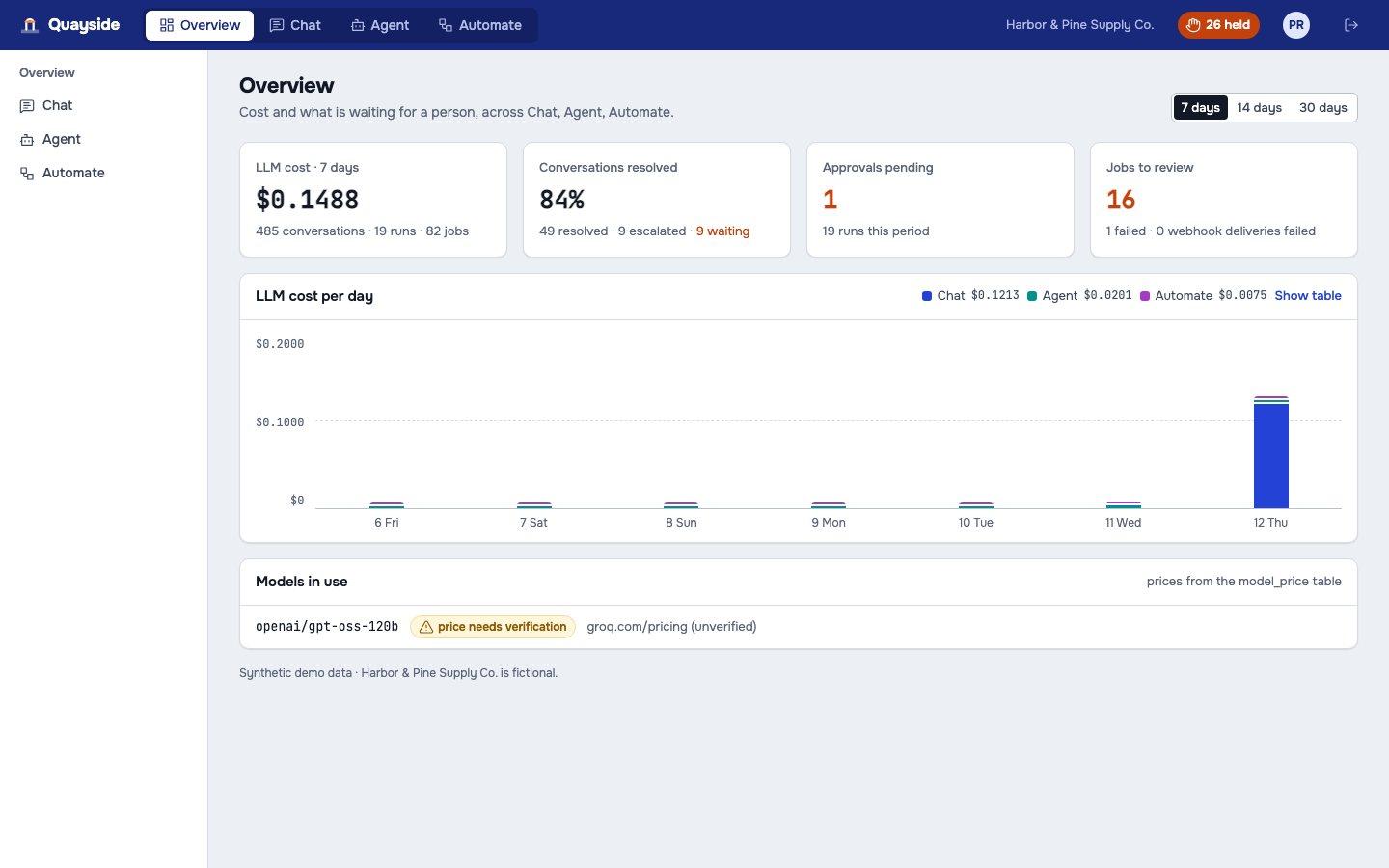
Quayside is a suite of three AI modules for a wholesale distributor, built so each can be deployed on its own. Chat answers customers from the company's documents and read-only order data. Agent runs ops tasks in plain language, such as reorder suggestions and draft purchase orders. Automate turns order emails into drafted sales orders through a REST API and signed webhooks, and works with n8n. All three share one trace view that shows every step with its token and dollar cost. The demo company, Harbor & Pine Supply Co., and all its data are synthetic.
The Challenge
- Each job fails differently.
- A chatbot invents answers, an agent can take an action nobody can undo, and an email parser guesses a product match.
- The suite has to be honest about when it does not know, and it has to be measurable.
The Solution
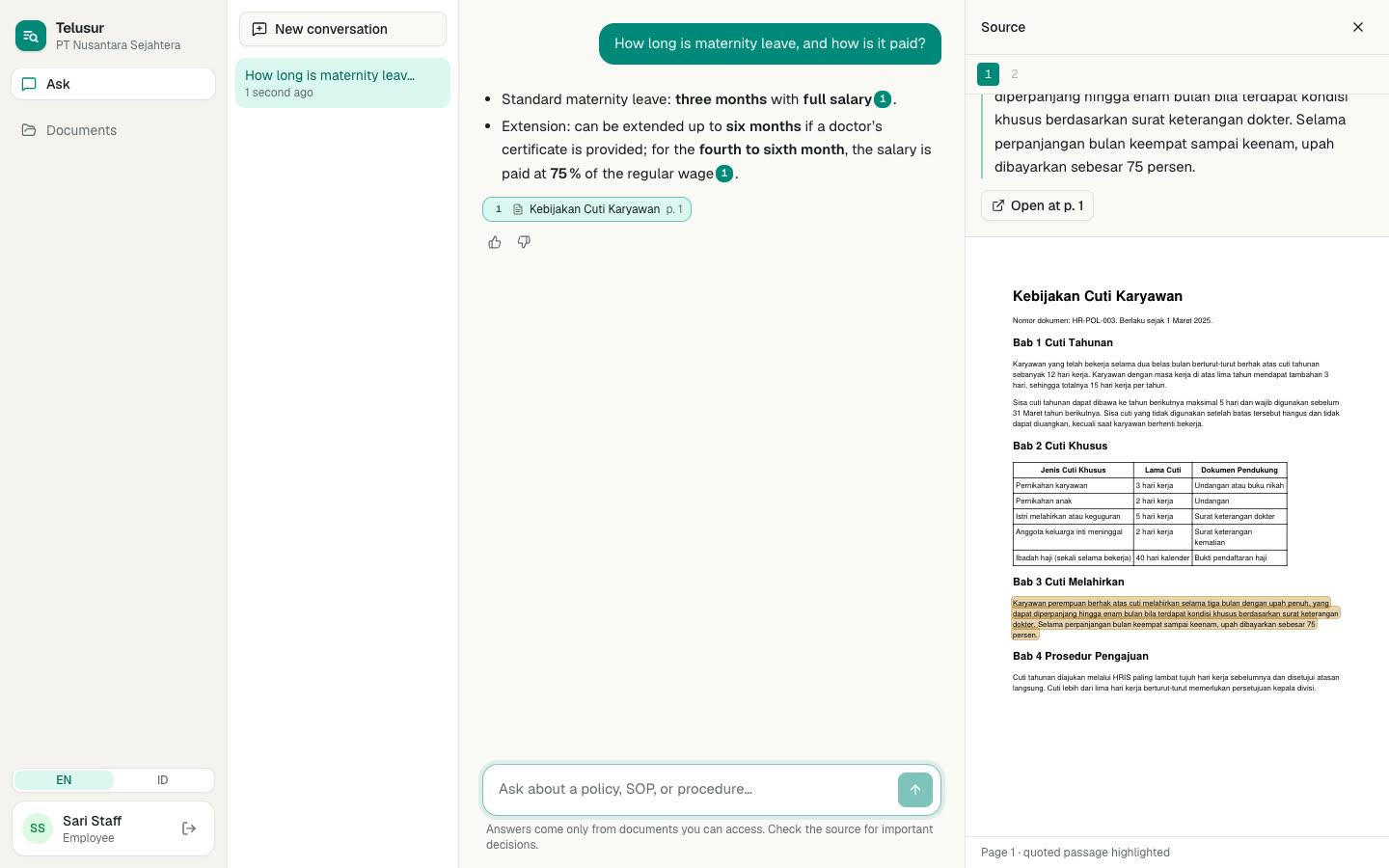
- Chat cites a source for every claim and refuses, offering a hand-off, when there is none.
- Agent holds every send_po for a person with editable quantities, and a held run survives a worker restart because its state lives in Postgres through LangGraph's checkpointer.
- Automate scores each SKU match and sends anything below 0.85 to review, with idempotency keys against duplicate orders.
- Business tools sit behind an MCP server, so modules never import each other.
- Each module has an eval set run against the real model.